.png)
Organizational Culture
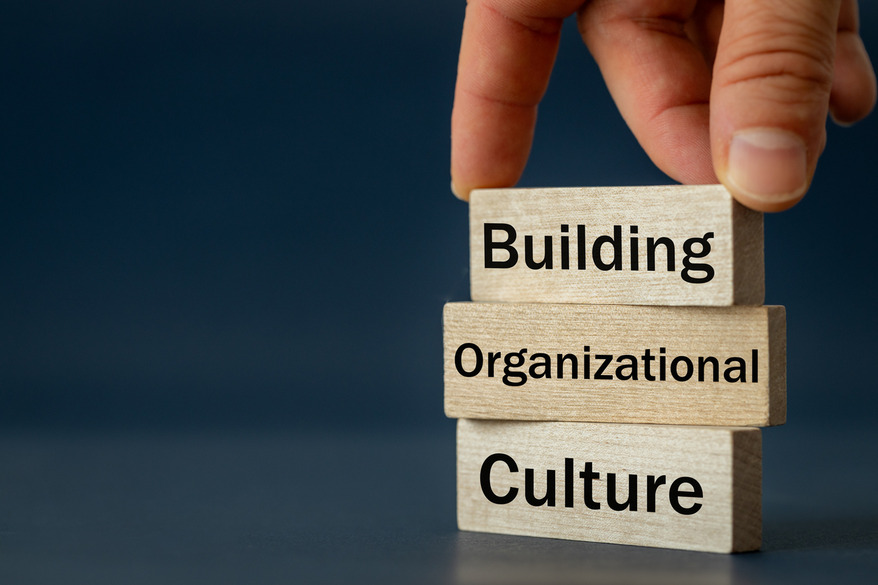
An organization's culture is often described as "the way things are done within the organization." No matter how clear an organization's strategies and policies may be, its culture remains an invisible element that powerfully influences the behavior of its members and its final results. Organizational culture has always been a key factor in determining the long-term success of any organization. However, until recently, we considered it a luxury, until we discovered, only in the last three decades, that it is a hidden force that controls the fate of organizations.
What is Organizational Culture?
Organizational culture is simply "the set of shared values, beliefs, standards, and behaviors" that governs how employees interact with each other and with stakeholders. It clearly shapes the daily practices within the organization, such as leadership style, decision-making methods, conflict management, and the level of cooperation between members of the same team and across different teams. Organizational culture also describes the accepted standards within the organization. Therefore, some management experts define organizational culture as "the worst level that the organization's leadership accepts in every area."
The Importance of Organizational Culture
Organizational culture plays a pivotal role in enhancing institutional performance, increasing employee satisfaction, and improving the organization's public reputation. Numerous studies show that organizations with a positive culture achieve higher levels of financial results, market share, quality, and sustainability, in addition to higher levels of employee satisfaction and retention rates. Conversely, a negative culture can undermine even the best plans and strategies, stifle creativity, lower team morale, and increase employee turnover. Often, change initiatives fail not because of poor planning, but because of an organizational culture that resists change due to prevailing negative behaviors.
The Role of Leadership in Building Organizational Culture
Beautiful and flashy slogans that we often see on walls do not build a work culture. What builds it are the repeated behaviors that the leadership team allows to emerge, and which, over time, become a prevailing pattern and an integral part of the organization's identity. In short, leaders are the ones who build organizational culture, whether they realize it or not. We can all probably agree that practical actions speak louder than official statements. What leaders focus on, tolerate, or reward are, quite simply, the building blocks of the organization's culture.
Elements of a Strong Organizational Culture
Undoubtedly, the elements of culture vary from one organization to another, but there are four major characteristics that high-performing organizations consistently share. These characteristics resulted from a study that lasted more than 25 years and included more than 930 high-performing organizations worldwide, conducted by Dr. Daniel Denison (University of Ann Arbor - Michigan, USA). These four characteristics can be summarized as follows: -
Can organizational culture be measured and developed?
Although organizational culture is a subtle characteristic, the behaviors of the team clearly reflect it, as mentioned previously. Therefore, we can measure the culture of any organization by measuring the behaviors of its team, using questionnaires designed for this purpose, and benchmarking against the best organizations around the world.We can also independently design the desired organizational culture in a proven and systematic way, then identify the gap between the current and desired cultures. Following this, we can develop an action plan to transfer the current culture according to a carefully considered timeline.
Conclusion
Once again, we emphasize that organizational culture is a significant factor influencing an organization's performance, bottom line, and sustainability. Building a culture that aligns with the organization's overall direction is not achieved through flashy slogans, but rather through a dedicated leadership team that consistently and effectively sets a positive example for all team members. This is because organizational culture is simply a reflection of the leaders' behavior on the rest of the team.